

Breast correction

Breast asymmetry that represents a significant deviation from the statistical norm can cause emotional distress for many women, for example when undressed in front of their partner or in a sauna. It can also present particular challenges when choosing bras, swimwear and tops. Furthermore, breast asymmetry may lead to postural problems or discomfort due to uneven strain on the musculoskeletal system. In some cases, it may also be associated with other skeletal and muscular abnormalities of the chest wall (e.g. Poland syndrome or Amazon syndrome), the spine (e.g. curvature of the spine, known as scoliosis) or misalignment of the pelvis.

At Wolff & Edusei Clinic, under the direction of Dr Andrea Wolff and Dr Isabel Edusei, both specialists in Plastic and Aesthetic Surgery, we offer medical and aesthetic treatments to correct breast asymmetry.
Breast asymmetry correction may be necessary due to a congenital malformation or as a result of medical conditions such as breast cancer, injuries or previous surgery. Corrective breast procedures aim to restore breast symmetry as far as possible and achieve both functional and aesthetic results that best meet your individual wishes and expectations.
Breast asymmetry correction may involve various surgical approaches, including breast reduction of the larger breast, breast augmentation with implants of the smaller breast or breast augmentation with fat transfer to achieve the desired volume. In addition, we may use specific breast lift techniques to adjust the shape of the breasts and create a harmonious overall appearance.

Our experienced clinic team places great importance on providing comprehensive consultations and personalised care to fully understand your individual needs and expectations. We are here to support you throughout the entire process, from your initial consultation and surgery through to aftercare, ensuring that you feel comfortable and well looked after at every stage.

If you would like to learn more about the options available for breast asymmetry correction or arrange a personal consultation, please feel free to contact us or use our online appointment booking service.

Breast Asymmetry Correction in Poland Syndrome

Poland syndrome is a complex congenital breast malformation (developmental defect) that is thought to have a genetic basis. Women affected by Poland syndrome often notice during puberty that their breasts are not developing as expected. Both the breast gland tissue and the underlying chest muscles may be absent or underdeveloped, causing the affected breast and often the entire chest wall to appear underdeveloped. Poland syndrome can affect one or both sides of the body and may be associated with other congenital abnormalities.

Surgical treatment of Poland syndrome requires an individualised approach. Breast asymmetry correction is often performed through breast augmentation with implants on the affected side. Depending on the individual findings, a lift of the opposite breast (see also breast lift) and nipple and areola correction, including a reduction in the size of the areola, may also be necessary. Silicone implants offer an established option for restoring volume to the affected breast. Alternatively, microsurgical reconstruction using the patient’s own skin and fatty tissue flaps or autologous fat transfer may be considered to achieve a functionally and aesthetically satisfactory result (see also breast augmentation with fat transfer).

Our experienced team at Wolff & Edusei Clinic is here to support you with specialist medical expertise and compassionate care throughout the treatment of Poland syndrome. If you have any further questions about Poland syndrome or the surgical options available for breast asymmetry correction, we warmly invite you to arrange a consultation at our clinic at a time that suits you.

Breast Asymmetry Correction for Tubular Breast Deformity

Tubular or tuberous breast deformity, commonly referred to as “tubular breasts”, is generally thought to have a genetic basis. This condition results in an atypical shape and size of the breasts and nipples compared with normal breast development. Typical characteristics include a narrow breast base, a conical shape and disproportionately large areolae, with the severity of these features varying depending on the extent of the deformity.
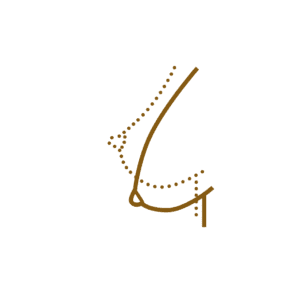
Illustration of the breast

The causes of tubular breast deformity are often linked to developmental abnormalities originating during the embryonic stage, which affect the normal growth of the mammary glands and connective tissue during puberty. As a result, the lower quadrants of the breasts remain underdeveloped, while the upper part of the breasts generally develops normally. This leads to an uneven and asymmetrical breast appearance, which can cause both physical and psychological distress.

Surgical correction of tubular breast deformity is often necessary to achieve a symmetrical and natural breast shape. Various surgical techniques are available to make both breasts as symmetrical and natural-looking as possible, and these procedures can also be combined: breast reduction, breast lift, breast augmentation with implants or breast augmentation with fat transfer. In cases of very small breasts, tissue expansion using tissue expanders, followed by their replacement with silicone implants, may be appropriate. Nipple and areola correction, for example in cases of excessively large nipples, can also be performed through an incision around the areola.

The optimal time for correcting tubular breast deformity is generally after breast development is complete, typically following puberty. Our experienced specialists in Plastic and Aesthetic Surgery, Dr Isabel Edusei and Dr Andrea Wolff, are here to support you throughout the process. They provide individual consultations to help determine the most appropriate time for your breast surgery and recommend the most suitable treatment method.

The results of surgical correction of tubular breast deformity can be long-lasting. However, they are naturally subject to the ageing process and other individual factors. Regular follow-up care and appropriate aftercare following breast surgery are important for supporting a favourable aesthetic outcome and maintaining long-term satisfaction.

Would you like to learn more about the options available for breast asymmetry correction in cases of tubular breast deformity or arrange a personal consultation? Please feel free to contact us. We are here to answer any questions you may have.

After Breast Asymmetry Correction

After breast asymmetry correction, it is important to allow sufficient time for recovery to support the healing process as effectively as possible. In the first few weeks following surgery, a special compression bra is often recommended and should be worn for at least 6 weeks. Wearing a compression bra supports wound healing, may reduce swelling and contributes to a favourable recovery process.

Resuming normal daily activities after surgical breast asymmetry correction should be tailored to your individual recovery and always follow the recommendations of your treating surgeon. Physical activities can generally be gradually resumed after approximately 4 to 6 weeks, while more strenuous exercise should usually only be considered after around 12 weeks. It is important to avoid overexertion and allow your body sufficient time to recover so as not to compromise the healing process or the final aesthetic outcome of your breast surgery.

Our clinic team is happy to provide you with further information and support throughout your aftercare.

You can find further frequently asked questions about breast asymmetry correction here.

SURGERY DURATION: from 90 minutes

TYPE OF ANAESTHESIA: general anaesthesia

HOSPITAL STAY: usually outpatient

PAIN: mild to moderate, depending on the surgical technique

AFTERCARE: usually a compression bra for 6 weeks

PRESENTABILITY, RETURN TO WORK: after 7–21 days, depending on your occupation

SPORTS: after 6 weeks, full physical activity after 12 weeks

COSTS: Depending on individual circumstances; a cost estimate will be provided following examination and consultation.

Ask our advice.

We’ll be glad to provide you with detailed information about this treatment. Simply get in touch with us now and obtain advice at an individual and absolutely personal level.

+49 30 - 94 041 144

Share page

Online appointments

You can make an appointment on line at any time quickly and easily via the free ‘Doctolib’ doctor booking platform.

Contact form

Outside our opening hours, you can also get in touch with us via our contact form. We will get back to you as soon as possible.

Online appointments

Through the doctor booking platform »Doctolib«, you can quickly, easily and free of charge book an appointment online at any time.

Contact form

Outside our opening hours, you can also contact us via our contact form. We will get back to you as soon as possible.